Skip to projects
Fawaz Bailey/Commerce

Ecommerce.
Made personal.

Different brands. Different ways to shop.
A collection of storefronts I’ve built, and the thinking behind each one.

Explore the projects
Design & development by Fawaz Bailey

Behind the storefronts.

The context, the choices, and the finished experience.

augustanewham.com
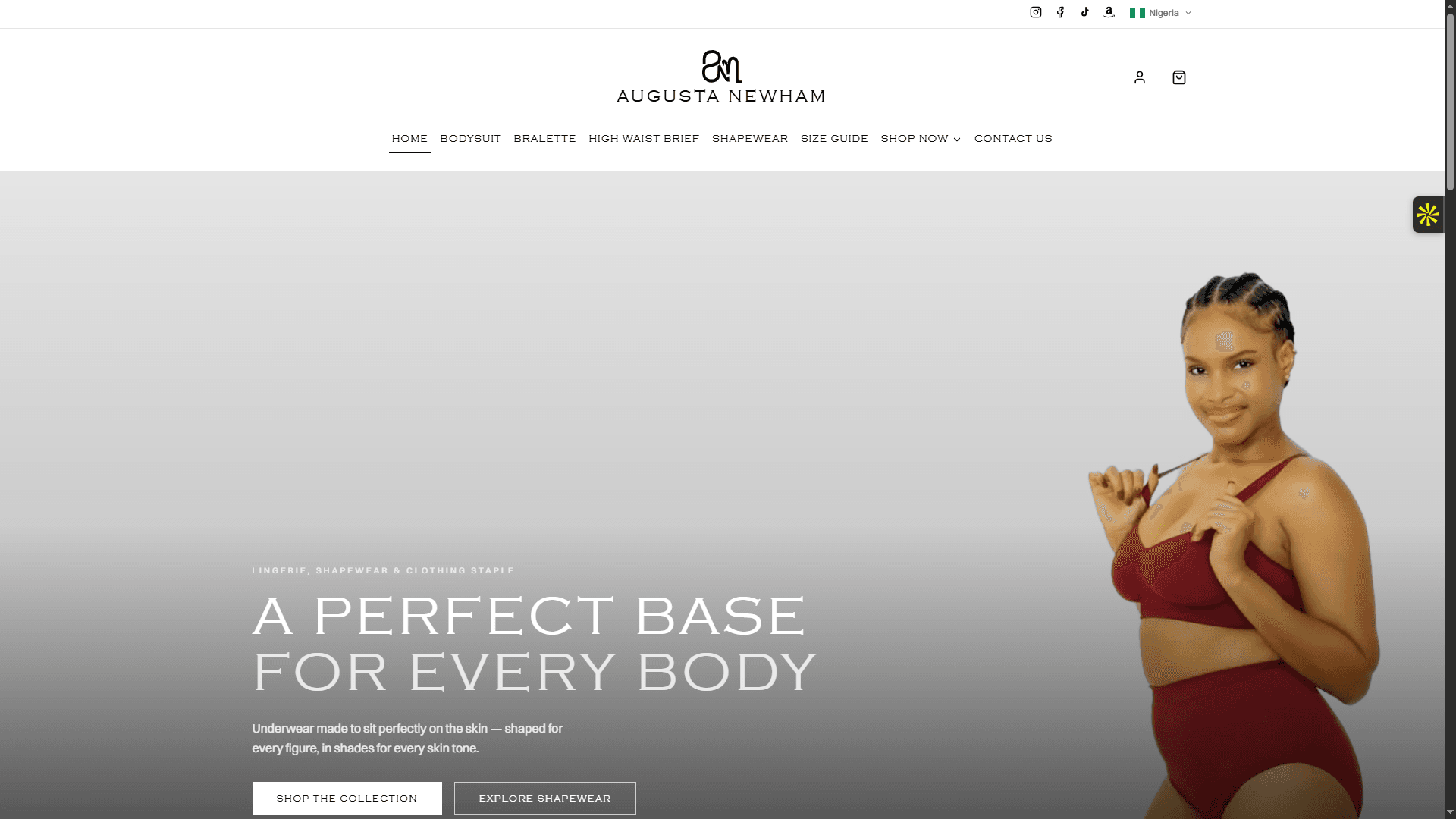
Augusta Newham homepage captured at desktop size
Captured from the live storefrontView full size

A better foundation for every body.

The starting point

Augusta Newham is an inclusive basewear label bringing its product range to market. The store presents bodysuits, bralettes, briefs and shapewear, with sizing from XXS to 8XL. My responsibility was the storefront and commerce experience. The brand has its own marketing team; campaigns and customer acquisition were outside my role.

A storefront built for the range

I built the responsive frontend in Next.js, using Shopify as the commerce backend. That gave the brand a custom browsing experience while keeping its catalogue, product variants and checkout in Shopify. Four clear product families, a size guide and quick-add controls help shoppers move from understanding the range to choosing a piece on desktop or mobile.

A subscriber benefit that just works

The newsletter needed to do more than collect emails. I created a dedicated customer category for subscribers and connected it to discount eligibility in the Next.js experience. The application checks the customer’s subscription status and applies the eligible product discount automatically. Subscribers do not need to remember, copy or enter a discount code.

Ready for a new chapter

The work brings brand presentation, product discovery and subscriber incentives into one shopping experience. With the product launch still recent, this case study documents the functionality delivered. There are no conversion-rate optimisation results to report yet, and it does not attribute the marketing team’s work to the storefront build.

Early visibility in search.

Augusta Newham · Google Search Console snapshot

View actual data
Total web search clicks
58
Indexed pages
22

The supplied snapshot shows the store beginning to appear in search. These are visibility signals at this early stage; purchase-conversion results are not yet available. Marketing remains with the brand’s own team.

See Augusta Newham’s Google search appearance

Custom storefront. Shopify underneath.

Next.js storefront

Next.js owns the customer-facing experience: the responsive layouts, product discovery, newsletter interaction and subscriber eligibility checks.

Shopify backend

Shopify holds the commerce layer: the product catalogue, variants, customer records, orders and checkout. The Storefront API connects that data to the custom frontend.

From subscription to a better price
  1. Subscribe

    The customer joins the brand’s newsletter.

  2. Check eligibility

    Subscriber status identifies the eligible customer category.

  3. Apply the benefit

    The eligible product discount is applied without a code.

A closer look at the implementation

This is a headless storefront: the customer sees a Next.js application rather than a Shopify theme. Shopify remains the commerce backend. The subscriber category and automatic eligibility behaviour are part of my implementation; the marketing team manages the brand’s marketing. No discount percentage or campaign performance is claimed here.

920luxury.com
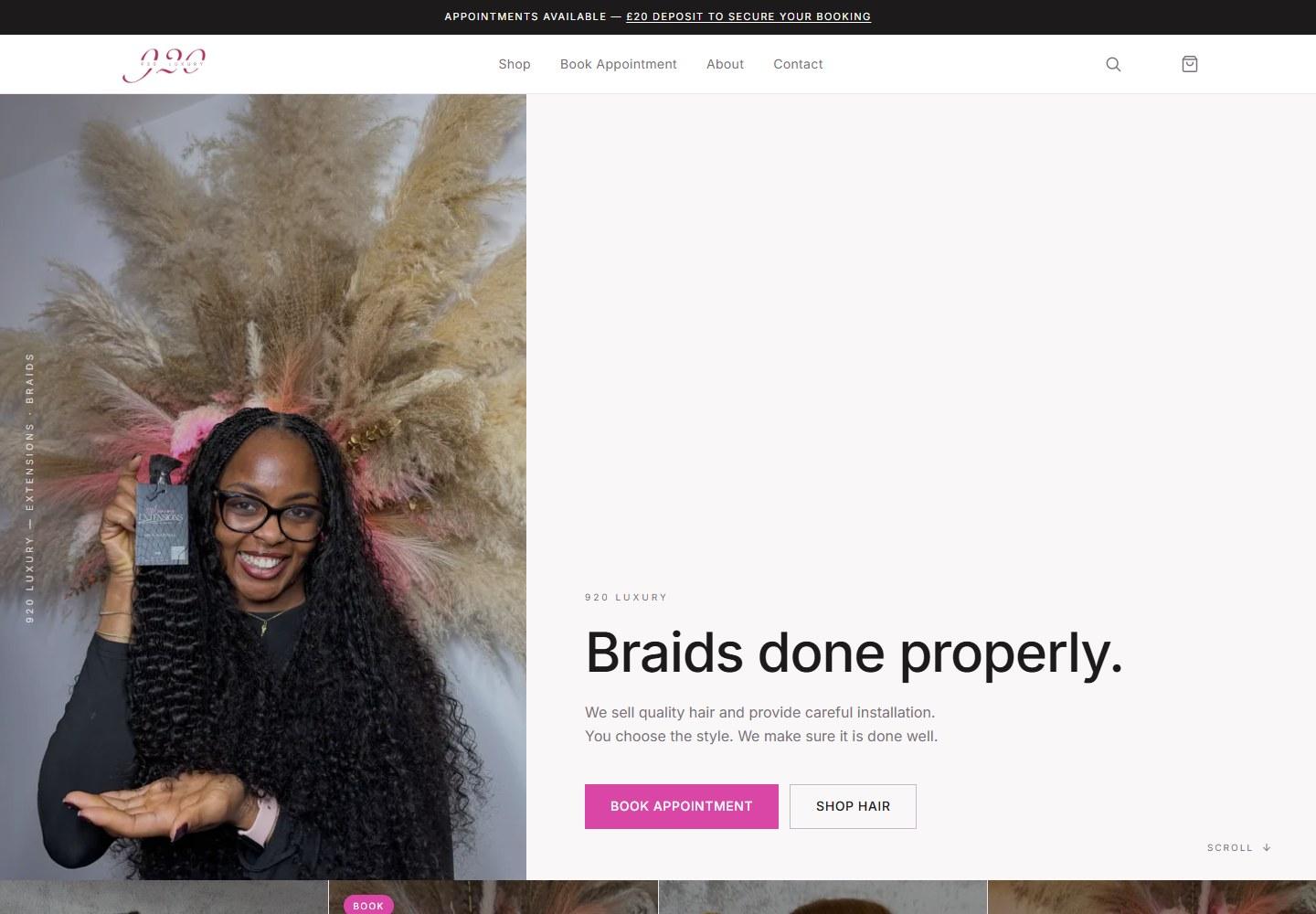
920 Luxury homepage captured at desktop size
Captured from the live storefrontView full size

Buy the hair. Book the chair.

More than an online hair shop

920 Luxury sells hair and styles it. Before the build, weekly sales were close to zero. I built a responsive storefront that gives customers a place to browse and purchase hair, alongside an appointment application inside the same website. Shopping and booking become connected parts of getting their hair done.

Removing the delivery detour

Customers can buy hair from the business and book the stylist who will install it. For customers having their hair fitted there, it can be ready at the salon when they arrive, instead of being delivered to them first. Hair purchases and appointment deposits have their own checkout flows, but both live within the same website and support the same customer journey.

An appointment app, built in

The booking flow walks customers through a service, relevant options and add-ons, a date, an available time, their details and a final review. Pricing and service duration follow the choices they make. Google Calendar supplies availability; the customer then pays the appointment deposit through Shopify checkout. Once Shopify reports the order as paid, the application creates the calendar booking and sends the owner an email notification.

A store that supports the service

The reported weekly picture after the build is around 50 website visits, 15 confirmed sales and 15–20 appointments, compared with sales close to zero beforehand. The benefit is practical as well as commercial: customers can arrange the hair and the appointment in one place, and the stylist can prepare for their arrival. Below, the Search Console export shows organic search activity alongside those reported business results.

The performance, in perspective.

Real search data, alongside the business results.

Search performance

920 Luxury Google Search Console

View actual data
ImpressionsDaily · 3 months

Times a result from the site appeared in Google Search.

27 Jun – 26 Sep 2026Download source CSV
Beyond search.
Weekly activity, reported by Fawaz
Website visits
≈50/ week
Confirmed sales
15/ week
Appointments
15–20/ week

From sales close to zero to around 15 confirmed sales a week, with hair purchases and appointments now accessible in one place. These are reported business figures; the Search Console export above measures Google search activity. All of it is organic: to the best of Fawaz’s knowledge, no paid ads or marketing campaigns have run.

How to read these results

The chart uses all 92 daily rows from the supplied Search Console export. Metric totals cover the full three-month period. Days without impressions have no CTR or position value. Sales and appointment figures are approximate weekly reports and may overlap; no purchase-conversion rate or percentage uplift is calculated.

920 Luxury — daily Google Search performance
DateClicksImpressionsCTRPosition
27 Jun020%56.5
28 Jun030%136.7
29 Jun030%36.3
30 Jun010%56
1 Jul050%13
2 Jul010%62
3 Jul1520%27.2
4 Jul030%53.3
5 Jul030%61.7
6 Jul040%49.2
7 Jul010%59
8 Jul010%4
9 Jul2825%31.8
10 Jul010%54
11 Jul1333.33%35.3
12 Jul1250%13
13 Jul040%62.2
14 Jul030%48
15 Jul040%19
16 Jul030%30
17 Jul030%5
18 Jul050%23
19 Jul00——
20 Jul040%20.2
21 Jul030%20.7
22 Jul050%58.4
23 Jul040%21
24 Jul040%30.5
25 Jul010%43
26 Jul030%5
27 Jul030%32.7
28 Jul020%10
29 Jul050%12.2
30 Jul030%25
31 Jul080%10.1
1 Aug020%29.5
2 Aug050%38
3 Aug050%22.4
4 Aug020%43.5
5 Aug040%31
6 Aug020%60
7 Aug040%29.5
8 Aug020%33.5
9 Aug030%24.7
10 Aug0100%24.3
11 Aug040%36.5
12 Aug040%22.8
13 Aug020%35
14 Aug040%25
15 Aug060%30.3
16 Aug060%16.7
17 Aug020%56
18 Aug040%37.2
19 Aug050%40.4
20 Aug030%31.3
21 Aug040%26.8
22 Aug060%29.5
23 Aug010%8
24 Aug030%27
25 Aug030%46.7
26 Aug060%36.2
27 Aug080%24.8
28 Aug040%27.2
29 Aug030%46.7
30 Aug050%45.8
31 Aug070%35.9
1 Sept060%16.8
2 Sept050%18.6
3 Sept060%18.8
4 Sept040%47.5
5 Sept00——
6 Sept010%1
7 Sept050%22.2
8 Sept040%5.5
9 Sept030%14.3
10 Sept010%10
11 Sept1333.33%7
12 Sept010%75
13 Sept010%7
14 Sept1616.67%13.5
15 Sept010%48
16 Sept030%3.3
17 Sept1333.33%5.3
18 Sept010%9
19 Sept1616.67%25.2
20 Sept00——
21 Sept030%32.7
22 Sept020%10.5
23 Sept040%63.8
24 Sept060%8.5
25 Sept010%2
26 Sept030%33
See 920 Luxury’s Google search appearance

Custom storefront. Shopify underneath.

Next.js storefront

Next.js renders collections, product options, search and the cart. It also runs the guided booking interface, with service choices, add-ons, dates, available times and a review step.

Shopify backend

Shopify is the backend for the catalogue, product variants, carts, customer accounts, orders and checkout. Both hair purchases and appointment deposits use Shopify’s checkout.

How a booking reaches the stylist
  1. Choose & schedule

    Service duration and Google Calendar availability determine the appointment options.

  2. Pay the deposit

    Next.js creates a Shopify deposit cart carrying the appointment details.

  3. Confirm & prepare

    A paid-order webhook creates the calendar event and emails the stylist.

A closer look at the implementation

The frontend calls Next.js API routes, which use Shopify Storefront GraphQL queries and cart mutations. The shopping cart ID is retained in an HTTP-only cookie. Booking checkout creates a separate cart containing a deposit product; service, customer and appointment details travel as cart attributes. The Shopify orders/paid webhook verifies the request signature, reads those details and creates a Google Calendar event with reminders and a customer invitation. Calendar availability checks use service duration and London time. Hair and appointment deposits are separate orders, not a combined checkout.

browniebakes.notanothershittydemo.site
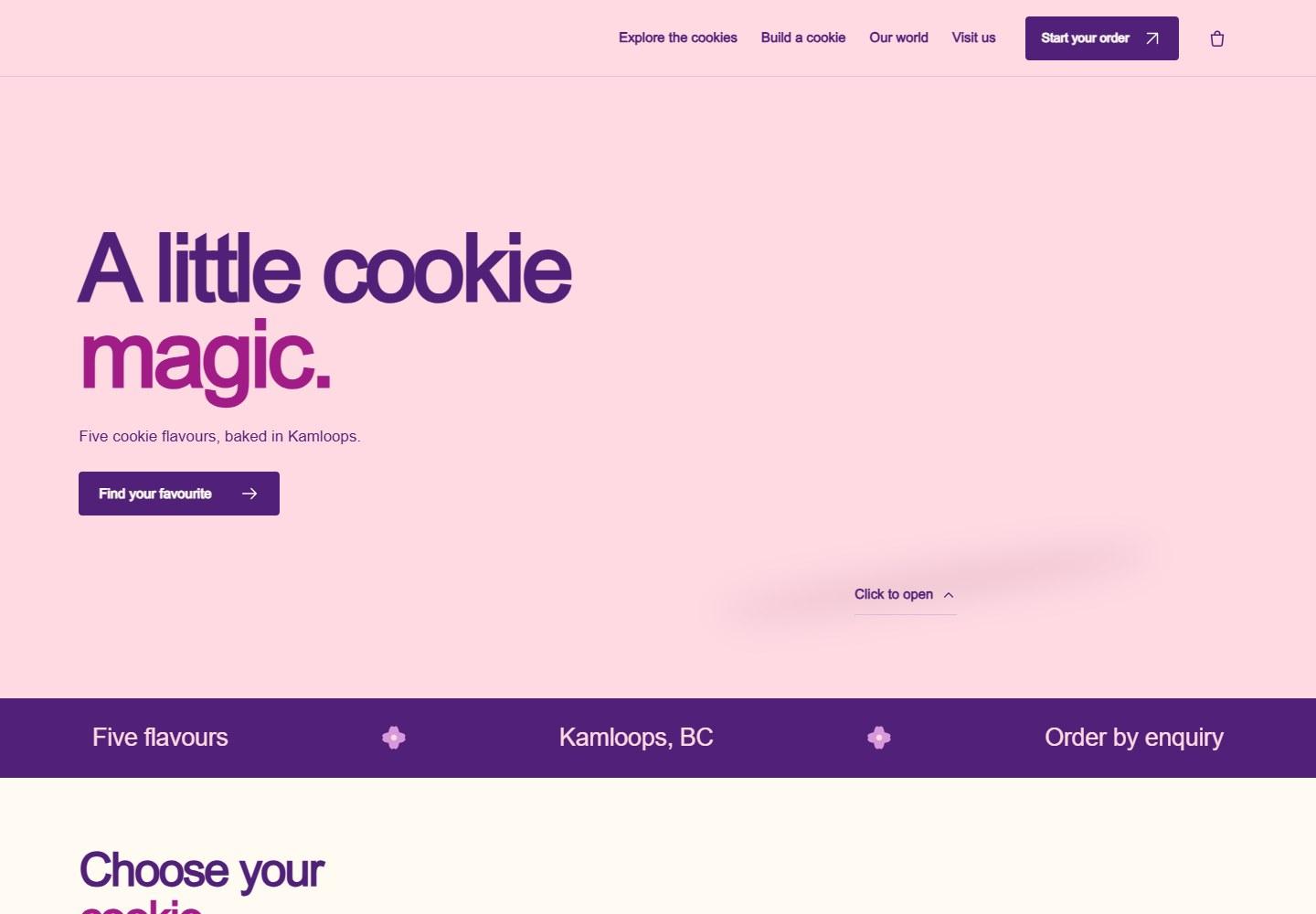
Brownie Bakes homepage captured at desktop size
Captured from the hosted previewView full size

A cookie box worth opening.

The starting point

Brownie Bakes is a small bakery in Kamloops, British Columbia, with five signature cookie flavours and orders arranged by message. The brief was a site that feels as indulgent as the product: somewhere to meet the flavours, see box sizes and prices, and start an order without losing the personal contact customers already have with the bakery.

Making the cookies the hero

The homepage opens on a 3D cookie box that customers can open with a click. It is rendered with Three.js from a compressed model; if WebGL is unavailable, matching open and closed images keep the interaction working, and reduced-motion preferences skip the lid animation. Each flavour has its own page with photography, a description and box-size pricing.

Build your own cookie

A custom cookie studio lets customers choose a base and up to four toppings, from chocolate chunks to freeze-dried strawberry, and watch them land on a live preview. Toppings keep their positions as others are added or removed, the price updates with each extra, and the preview docks in the corner while the customer works through the options.

Where it stands

This is an early preview, pending review with the bakery before handover. Orders are currently enquiries: the site composes a message that the customer sends to the bakery on Instagram, and the bakery confirms availability and price. The build also contains a prototype cart with pickup or local delivery and preparation dates, but online payment is not switched on and nothing is charged. There are no sales or conversion results to report.

No results to report yet.

Brownie Bakes · Preview status

Open the preview
Stage
Early preview
Handover
Pending review
Online payment
Not switched on
Sales & CRO data
None yet

The site has not been handed over or opened to customers, so there is no traffic, sales or conversion data to show. Orders are enquiries confirmed directly with the bakery; the prototype checkout takes no payment and sends nothing to the bakery.

A rich front end. No payments yet.

Next.js experience

Next.js serves the menu, flavour pages, visit details, FAQs and policy pages. The 3D cookie box and the cookie studio load Three.js on the client only, with image fallbacks when WebGL is unavailable.

Prototype order flow

There is no commerce backend yet. The prototype cart, fulfilment choice and order confirmation live in the browser, and the enquiry is sent by the customer through Instagram. Prices and fees are placeholders until the bakery confirms them.

From craving to confirmed order
  1. Choose or build

    The customer picks a signature flavour or builds a custom cookie.

  2. Box it up

    They choose a box size and see the price for that box.

  3. Confirm with the bakery

    The enquiry goes to Brownie Bakes on Instagram to confirm details before paying.

A closer look at the implementation

Three.js, its GLTF and Draco loaders load lazily after the page renders, so the scene does not block the first view. The cookie box renderer handles WebGL context loss and disposes its geometry, materials and textures on unmount. Topping placement is seeded from each topping's ID, so pieces never move when the selection changes. The prototype cart persists to local storage and syncs across tabs; its checkout validates Kamloops postal codes for delivery and offers dates after a two-business-day preparation window. The checkout is explicitly labelled as a demo: no card details are collected and no order reaches the bakery.

Your brand.
Its next chapter.

Have a store in mind? Let’s make an experience that feels like you.

Let’s talk